Forest bathing invites us to slow down and hear the multiple narratives living in the landscape.
[Submitted in response to the Learning Landscape initiative online symposium]
Forest bathing, or shinrin-yoku, is often described as a wellbeing practice, an immersion in the sensory atmosphere of the forest. Rather than offering a structured story, it offers a space where participants slow down, notice more, and connect with the diverse narratives present in a natural landscape. In this way, forest bathing aligns with the wider shift in interpretation toward dialogue, reflection and personal meaning-making.
The forest is an ideal setting for exploring the question, Whose stories are told? While many heritage sites still emphasise dominant historical or cultural narratives, natural landscapes hold a multiplicity of simultaneous narratives – ecological, cultural, scientific, spiritual and personal. Forest bathing does not prioritise one over the other. Instead, it invites participants to recognise that their own presence becomes part of the place’s evolving story. Gentle prompts, such as “Notice what draws your attention”, help individuals uncover personal memories, associations, and emotions, addressing the question, How can people become aware of their own narratives?
This approach also helps address another challenge: How do we balance factual accuracy with narrative richness? Forest bathing does not contradict scientific knowledge; instead, it places it in context. A guide may share ecological perspectives, but these serve as invitations rather than explanations. Participants are encouraged to sense, reflect, and co-create meaning from their encounters. Forest bathing shows that facts can be offered not as directives, but as invitations to reflection. Emotional engagement becomes a pathway to critical thinking and self-reflection, rather than conflicting with evidence-based understanding.
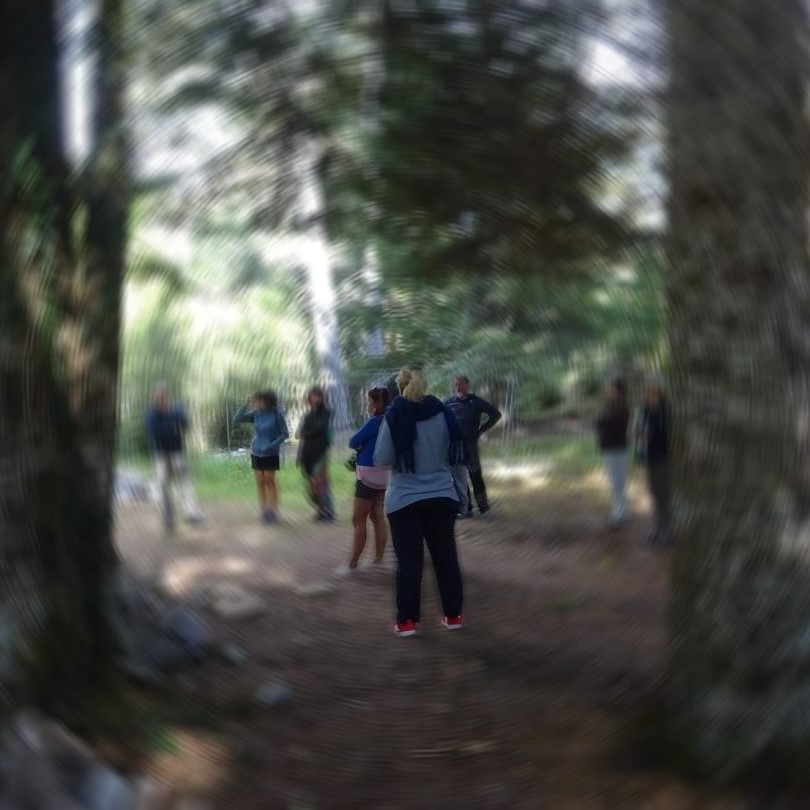
Most importantly, forest bathing highlights how the interpretive profession is evolving, responding to the question, How is the interpretive profession adapting for the future? Guides become facilitators, mediators, and co-creators of meaning rather than solely conveyors of knowledge. Shared silence, sensory invitations and reflective circles enable participants to contribute their own perspectives, showing that heritage interpretation can trigger experiences rather than only deliver information. Such experiences can support dialogue, help manage narrative tension and foster social cohesion.
In a time of ecological crisis, forest bathing offers a gentle yet profound method for shaping new narratives, ones rooted in presence, reflection, and co-creation. After all, heritage is not just what we preserve, but how we relate to the world.
Georgia Pyriovolis is an English teacher, certified tour leader and mountain guide, as well as a pioneer of Forest Bathing practice in Greece, recognising the profound link that nature plays in cultivating health and wellness. She facilitates nature-based experiences that foster reflection, dialogue and meaningful connection with place. You can get in touch with her at: gpyriov@gmail.com.
To cite this article: Pyriovolis, Georgia (2026) “Listening to forest narratives”, Interpret Europe Newsletter Spring 2026, p. 20.
Available online: Interpret Europe Newsletter Spring 2026.