A heritage site can preserve extraordinary places, traditions and memories, but its significance becomes more meaningful when people can understand, connect with, and appreciate the stories behind it.
For six heritage destinations across Southern Africa, this means going beyond presenting facts to visitors. It means asking deeper questions:
What should visitors understand?
Whose voices should they hear?
How can communities participate?
And how can stories contribute to conservation, education and sustainable tourism?
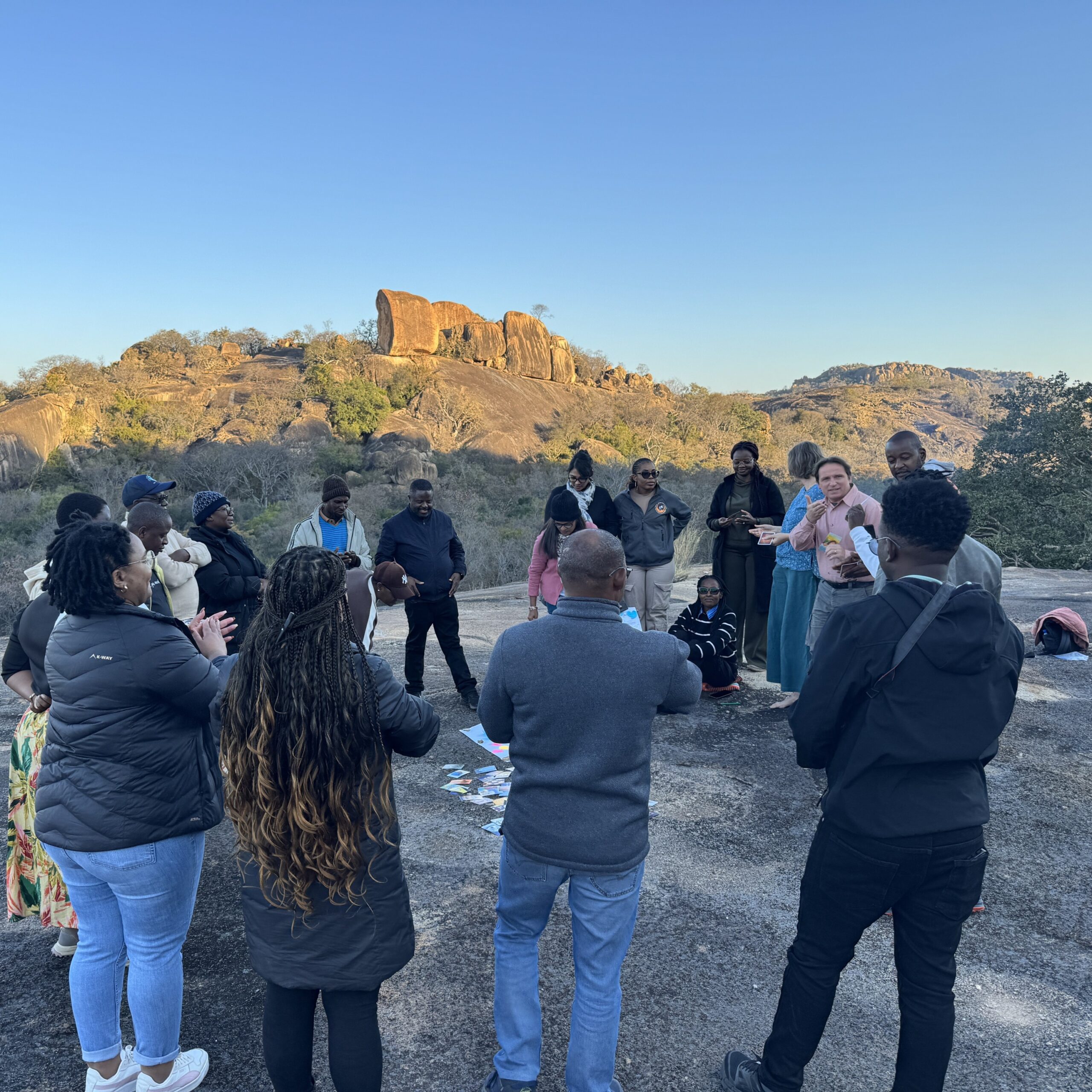
These questions were at the centre of a regional training on interpretation and storytelling held from 27 to 31 July 2026 at Matobo Hills, in Bulawayo, Zimbabwe, which brought together participants from Botswana, Eswatini, Lesotho, Namibia, South Africa and Zimbabwe.
Supported by the European Union and implemented by UNESCO through the Africa–Europe Partnerships for Culture: Promoting Culture and Heritage-based Sustainable Tourism in Southern Africa project, the training was delivered in collaboration with Interpret Europe and technical support from the African World Heritage Fund.
Moving from planning to visitor experience
The training marked an important step in the project’s journey from planning towards implementation. Across the six participating sites, Tsodilo Hills World Heirtage Site, Matsanjeni North, Morija Cultural Precinct, Twyfelfontein / Ui-//aes World Heritage Site, ǂKhomani Cultural Landscape World Heritage Site and Matobo Hills World Heritage Sites, work is underway to strengthen how heritage is managed, interpreted and connected to sustainable tourism development.
Interpretation is a critical part of this process. Rather than producing interpretation frameworks that remain as planning documents, the project aims to translate them into experiences that visitors can see, hear and participate in, including guided experiences, heritage trails, exhibitions, community storytelling and appropriate digital interpretation.
Through the Interpret Europe Certified Interpretive Planner (CIP) training course, participants explored practical methods for identifying the significance of heritage, understanding different audiences, developing meaningful themes and connecting tangible places with the stories, memories and values associated with them.
The learning extended beyond the training room, with practical exercises encouraging participants to consider how interpretive principles can be applied in real heritage settings.
The training challenged us to think beyond simply giving visitors information about our sites. Good interpretation is about creating a connection, helping visitors understand why a place matters, whose stories it carries and what they should take away from the experience.
Corera Links, Socio-Economic Transformation Officer – ǂKhomani Cultural Landscape World Heritage Site, South Africa.
Putting people and multiple voices at the centre
At the heart of effective interpretation is people. Heritage sites hold different histories, memories, meanings and perspectives. The objective is, therefore, not to develop one standard story across the six destinations, but to equip each site team to develop an interpretation framework grounded in its own heritage values, communities and visitor context.
Community participation will be particularly important as this work moves forward. Local communities are not only beneficiaries of heritage tourism. They are knowledge holders, custodians and storytellers whose perspectives can help shape how places are understood and presented.
Bringing these voices into interpretation can also create opportunities for local guides, creatives, cultural practitioners, entrepreneurs, women and young people to participate more meaningfully in the visitor economy.
As local guides, we are not only showing visitors places; we are sharing stories that come from our communities and our lived experiences. It is important that local people are involved in deciding how those stories are told, so that visitors hear the voices of the people connected to the heritage.
Sipho Khoza, Local Community Guide – Matsanjeni North, Eswatini
This reflects a broader shift towards interpretation that is inclusive and multivocal, recognising that heritage can carry different meanings for different people and that these perspectives are part of what makes a place significant.
Learning by doing
The training was designed not simply to introduce interpretation theory, but to prepare participants for the work that follows.
Through facilitated sessions, group exercises, practical activities and reflection, participants considered how interpretation can provoke curiosity, encourage participation, create deeper meaning and ultimately strengthen stewardship of heritage.
One question captured this approach throughout the training: What story should every visitor remember after leaving your heritage site?
The question moves interpretation beyond signs, information panels and guided commentary. It asks site teams to think about the lasting connection between the visitor and the place, and what understanding that comes from emotion or curiosity a visitor should carry with them afterwards.
Interpretation is not simply about providing more information. It is about creating meaningful connections between people and heritage. When visitors are encouraged to think, participate and discover meaning for themselves, interpretation can contribute to a deeper appreciation of a place and its values.
Michal Medek, Interpret Europe trainer
From training to site-level action
The conclusion of the regional training is, therefore, a beginning rather than an end. Participants will take the knowledge and methods developed during the programme back to their respective sites, where the next stage will involve working with site teams, communities and other stakeholders to develop site-specific interpretation and storytelling frameworks.
These frameworks will help identify the stories each site wants to communicate, the audiences it seeks to reach, whose perspectives need to be represented, and the most appropriate ways of turning those narratives into visitor experiences.
This site-level process is particularly important because the six destinations are very different. Tsodilo Hills WHS, Matsanjeni North, Morija Cultural Precinct, Twyfelfontein / Ui-//aes WHS ǂKhomani Cultural Landscape WHS and Matobo Hills WHS each have distinct histories, landscapes, communities, heritage values and tourism contexts.
Their interpretation should reflect those differences.
This training is not an end in itself. What matters now is how the learning is taken back to each of the six sites and translated into interpretation and storytelling frameworks developed with communities and other stakeholders. Ultimately, we want to see those frameworks move from paper into real visitor experiences that strengthen people’s connection with heritage while creating opportunities for communities.
Rodney Bunhiko, Project Coordinator – UNESCO
Turning stories into sustainable futures
The ambition extends beyond improving how stories are told. Strong interpretation can contribute to more meaningful visitor experiences, diversified tourism products, opportunities for local livelihoods and greater understanding of why heritage needs to be protected.
For the Africa–Europe Partnerships for Culture project, this connects interpretation directly to the wider objective of developing sustainable culture and heritage-based tourism across Southern Africa.
The measure of success will, therefore, not be the completion of the training itself, or even the production of six interpretation frameworks. It will be seen in what happens afterwards: whether guides are better equipped to engage visitors; whether communities have stronger voices in how their heritage is presented; whether new experiences and opportunities emerge around heritage; and whether visitors leave with a deeper understanding of the places and people they have encountered.
The training provided the participating site teams with a common foundation. The next step is to turn that learning into locally grounded interpretation frameworks and those frameworks into experiences that connect people with heritage. Because ultimately, the most powerful heritage stories are not simply the ones that are told. They are the ones people understand, feel connected to and carry with them long after they leave.
Rodney Bunhiko is a culture and heritage professional the Project Coordinator for the UNESCO Regional Office for Southern Africa (ROSA). He has coordinated significant cultural initiatives, including restoration and storytelling development projects at the Great Zimbabwe National Monument and regional heritage preservation programmes.
Rodney can be contacted at: r.bunhiko@unesco.org