Can a training course change the way you see heritage—and yourself? My CIG experience in Zagreb.
Attending a Certified Interpretive Guide (CIG) course is not only about learning and practising heritage interpretation—it is also a valuable opportunity for personal growth, meaningful connections, and discovering new strengths.
Before attending the CIG course in Zagreb in May 2026, I thought heritage interpretation was largely a theoretical concept, something discussed mainly in academic circles. A week later, I left with a completely different perspective—not only on interpretation itself, but also on my own abilities.
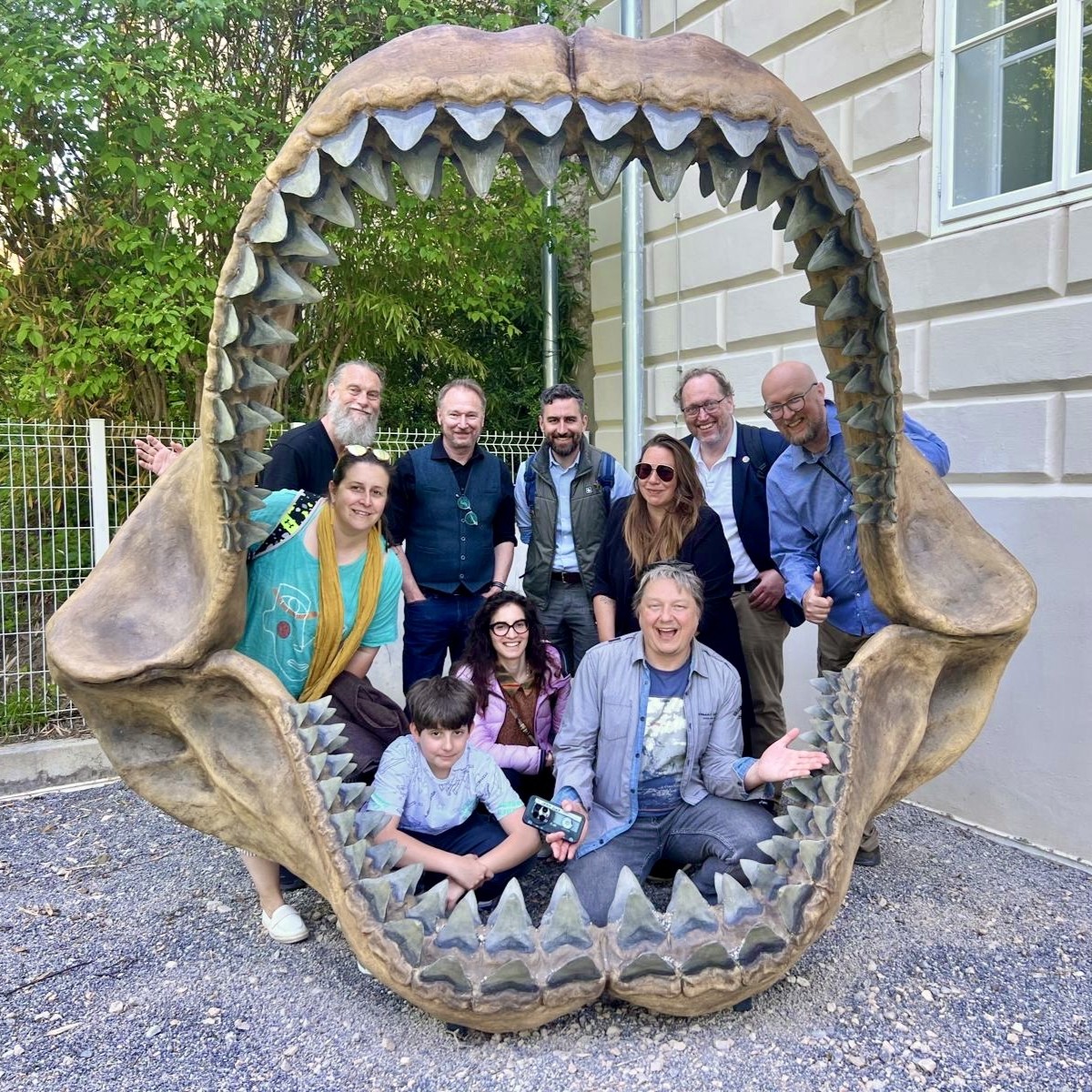
Together with a diverse and dynamic group of participants from across Europe, I joined the course for reasons ranging from professional development and capacity building to exploring new career opportunities. What I did not expect was how enriching the experience would be on both a personal and collective level.
My background is not in tourism, and I had only limited experience as a guide. What brought me to Zagreb was a passion for both tangible and intangible heritage and a curiosity about interpretation. Before the course, my understanding of the field was quite abstract. Through practical exercises, discussions and exchanges, I discovered that interpretation is far more than a theoretical framework. It is a powerful approach that helps people connect with heritage in meaningful ways and can be applied across a wide range of contexts.
On a personal level, the course revealed a strength I had not fully recognised: public speaking. During an interpretive exercise at the Museum of Natural History, I found myself speaking confidently in front of the group and genuinely enjoying the experience. For someone with little guiding experience, this was an unexpected achievement. Yet I believe it would not have been possible without the supportive atmosphere created by both the participants and our trainer. Watching others step outside their comfort zones, embrace challenges and grow in confidence was equally inspiring.
Our trainer played a key role in creating an environment where learning felt both engaging and encouraging. Alongside the theoretical sessions, we took part in practical outdoor activities that allowed us to explore Zagreb’s hidden gems while developing our interpretive skills in small groups. Constructive feedback, enthusiasm and constant encouragement helped us focus not on perfect performance, but on continuous learning. The warm and welcoming atmosphere quickly turned a group of strangers into a supportive learning community. And we were often reminded, “There is always room for improvement”.
Looking back, one of the most valuable aspects of the course was the opportunity to learn from one another. Through activities that encouraged personal connections and deeper reflection, we exchanged perspectives, shared experiences and discovered new ways of approaching heritage interpretation. In doing so, many of us began to experience a genuine shift in perspective.
The greatest lesson I took away from the CIG course is that interpretation is not simply about communicating heritage. It is about creating meaningful connections—with places, stories and people, including ourselves. That is why I would recommend this experience not only to guides and tourism professionals, but to anyone curious about heritage and eager to discover new perspectives, new skills and perhaps even new paths for the future.
Ilaria Scarmagnan is IE’s Project Assistant for delivering the European-funded project HI-People, having previously worked in the Culture unit of the UNESCO office in Venice. She can be contacted at: ilaria.scarmagnan@interpret-europe.net.
To cite this article: Scarmagnan, Ilaria (2026) “Interpreting heritage, discovering yourself”, Interpret Europe Newsletter Summer 2026, pp. 17–18. Available online: Interpret Europe Newsletter Summer 2026.