Interpret Europe’s participation in an Erasmus+ Project supporting WW2 heritage projects for a better future.
Last year, Interpret Europe joined the consortium of an Erasmus+ project called LRE Youth Ambassadors Network. The project kicked off at the end of 2025, and the team has been working behind the scenes to set the stage for the main project activities. After the recent launch of the recruitment for the new Youth Ambassadors Network, our work has become more tangible, so we feel it’s time to share it with you.
About the project
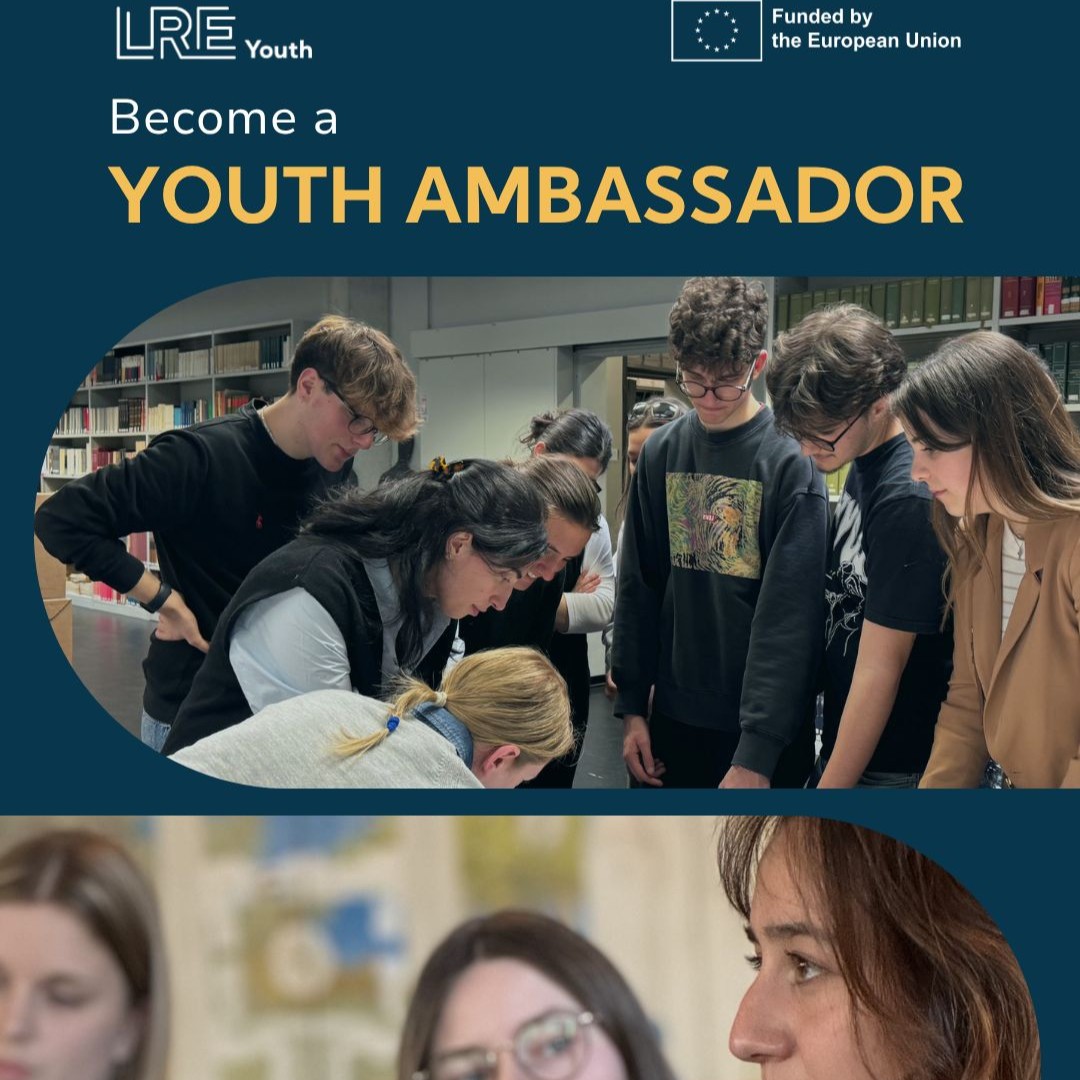
Project coordination is in the hands of LRE Foundation, an international network dedicated to preserving the heritage of World War 2 and its memory, making that history relevant to everyone, especially new generations. They have a special LRE Youth Programme, which sparked the idea of creating a network of LRE youth ambassadors, and led to this project. The aim of the project is to provide a platform for young individuals aged 15-30 to deepen their historical understanding and actively contribute to the preservation and interpretation of WWII history. Other partners include: the Max Mannheimer Study Center from Germany; the Museum of the Second World War from Poland; Post Bellum from Czechia; the Tourism, Culture and Heritage Association from Belgium; Studio Globo from Belgium; and, last but not least, Interpret Europe.
Upcoming events
During the course of the project, we plan to organise various events, starting with some free online training sessions in digital storytelling. A study trip with on-site workshops in Bavaria is planned for 2027. The first in-person event is the Youth Forum in Prague, Czechia, in February 2027. Another one will take place in Bastogne, Belgium, in 2028. The final is the Youth Remembrance Summit in Gdansk, Poland.
The first activities open for participation are online training sessions. They will be conducted in several cycles, with the first starting before the end of this year. We will include a detailed programme and the application form in the next issue of the newsletter.
Interpret Europe’s role
The project involves educational activities that could benefit from heritage interpretation training. Interpret Europe’s main task is to work with the Belgian NGO Studio Globo to develop online training sessions. IE’s engagement started a few years ago, when the LRE Foundation asked Interpret Europe to join a project application. IE sent out a call to its trainers, and the joint application by two of our trainers was selected, should a project receive funding.
The trainers are sharing their expertise and finding ways to implement it in the online setting. Our partners from Studio Globo have vast experience working with schools and teachers, and they believe in the importance of education as a lever for social change. Our close collaboration with them has been very rewarding as they are working towards openness, empathy, and values that can build a democratic, inclusive society. Towards the end of the project, we plan to put together a document that will share details of the training process, its outcomes, and, hopefully, a good model for anyone to work with.
How can you get involved?
If you’re 30 or younger, you can get involved directly by joining the Youth Ambassadors Network (see the link below). You will receive the information about the exact dates, programmes, and ways to join the upcoming project events. Your participation doesn’t have to be passive. In fact, we hope that some of you will soon take over the network.
The main target group for the online training sessions is youth, but they will be open to anyone.
If you work with people aged between 15 and 30, you can share this information and any future updates with them and help them join the network. We would love for you to contact us if you’d like more details or have any suggestions. For example, an entire class or study group can join the online training session. If we notice greater interest from a particular age group, we can adjust the content of a training cycle to better accommodate them.
Also, if there is interest from a large number of young people who don’t speak English, we might consider organising an online workshop in their native language.
If your institution also works on a remembrance project, this could be a good addition to your own curriculum. It doesn’t hurt to drop us a message, because there is a lot of flexibility.
We could also use help with expertise and stories. If you have special expertise in working with youth, know of other related projects, have strong practice examples, or would like to share with us works that explore WW2 and related social challenges in an interesting way, please share them with us. Also, please share examples of inspiring stories from your countries that could serve as inspiration when we ask young people to retell a historical event from their surroundings.
We will provide regular updates throughout the project. Until then, we hope this article sparked some interest. If you’re wondering how WW2 history can be relevant to youth, let us assure you that some of the project partners already have extensive experience working with young people on these difficult topics.
The times we are living in are the closest the world has come to the situation leading to WW2. It couldn’t be more relevant for the youth, or all of us.
Find out more:
LRE Youth Ambassadors website: https://www.lre-youth.eu/
LRE Youth Ambassadors Network application form: https://www.lre-youth.eu/sign-up-youth-ambassadors/
LRE Youth Ambassadors on Instagram: https://www.instagram.com/lre_youth/
Samia Zitouni and Iva Silla are Interpret Europe trainers from Croatia. They are working with experts from Studio Globo to develop a set of interactive and reflective online sessions for the LRE Youth Ambassadors project. Contact Samia at samiaztn@gmail.com and Iva at iva@questoftales.com.
To cite this article: Zitouni, Samia and Silla, Iva (2026) “Liberation Route Europe is creating a Youth Ambassadors Network”, Interpret Europe Newsletter Summer 2026, pp. 11–12. Available online: Interpret Europe Newsletter Summer 2026.