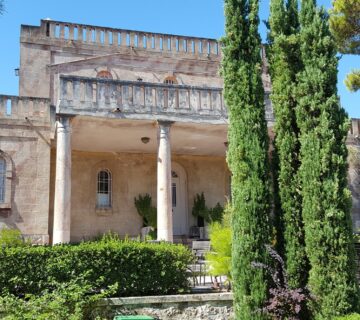
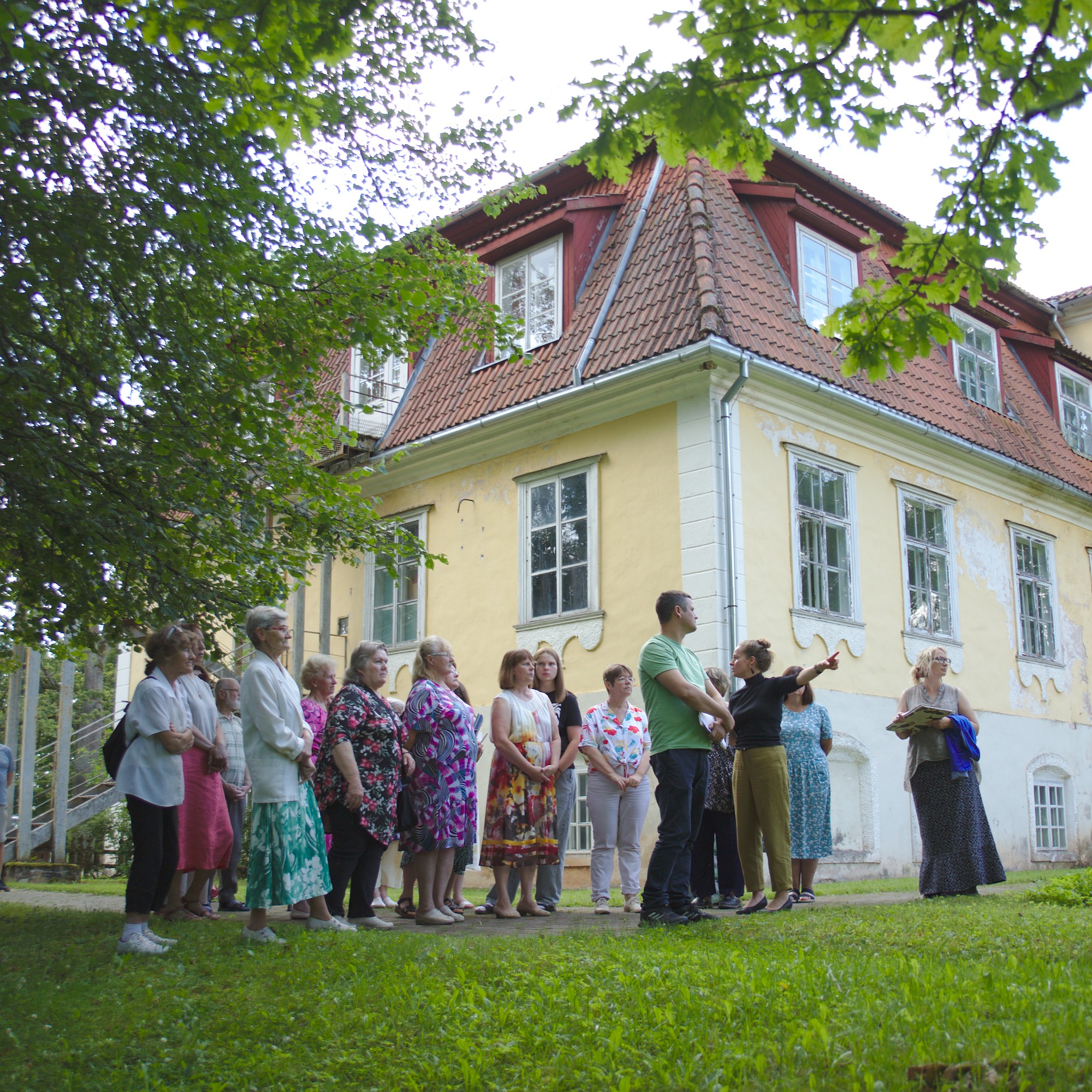
An abandoned manor house in north-east Latvia is trying out new functionality and interpretation based on values and community participation.
The Beļava Manor House is a mid-18th-century Baroque monument of national importance located in north-east Latvia. After losing its function in 2019, the manor was left without active management, raising an important question: How can a heritage site regain functionality, meaning, visibility, and a sustainable role in contemporary community life?
In 2025, local visioners – Ilze Vanaga, Herta Pugača and Laura Vecmane-Bārtleta – initiated activities aimed at building a new heritage community for the manor, identifying the site’s values, strengthening public awareness, and developing meaningful interpretation. A development workshop, concerts, lectures, poetry events, pottery workshops, and other activities helped reactivate the site while also testing its possible future uses.
The case of the Beļava Manor demonstrates how a values-based heritage approach can go beyond the preservation of physical fabric alone. It highlights a broader understanding of heritage by recognising historical, aesthetic, social, spiritual, ecological, and economic values that were attributed to the site by different stakeholders. At the centre of this process were people — residents, former users, heritage and tourism specialists, and community leaders — whose knowledge, memories, and expectations helped to shape the future of the site.
The value mapping process revealed both tangible and intangible elements that were highlighted by different interest groups: the manor’s park and old trees, its historical landscape, Baroque architecture and interior details, authentic elements, and the strong emotional connection of the former school community. From this process emerged two interpretation directions – Magnetic Authenticity and Contemporary Enlightenment. The mapping process revealed a strong presence of shared values, namely, different interest groups expressed similar views, memories and visions about the site and its future uses. This significantly facilitates the process of its interpretation and development in the future.
Rather than remaining a museum-like monument, Beļava Manor is imagined as a dynamic place for community events, festivals, children’s camps, residencies, restoration activities, and tourism. The case also underlines the importance of keeping the property in municipal ownership to protect its public value and support long-term, inclusive development. It offers an inspiring example of how heritage can be reactivated through shared values, participation, and imaginative interpretation.
[This article was submitted in response to the IE Learning Landscapes online symposium held in February 2026.]
Ilze Vanaga is a life-long learning and heritage projects coordinator based in Gulbene county, Latvia. She is open for collaboration in the field of manor heritage, and can be contacted at: ilze.vanaga@gulbene.lv.
To cite this article: Vanaga, Ilze (2026) “Reimagining Beļava Manor through shared values”, Interpret Europe Newsletter Summer 2026, pp. 28–29. Available online: Interpret Europe Newsletter Summer 2026.