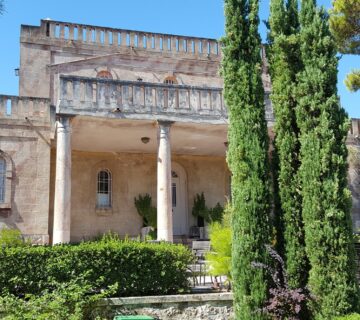
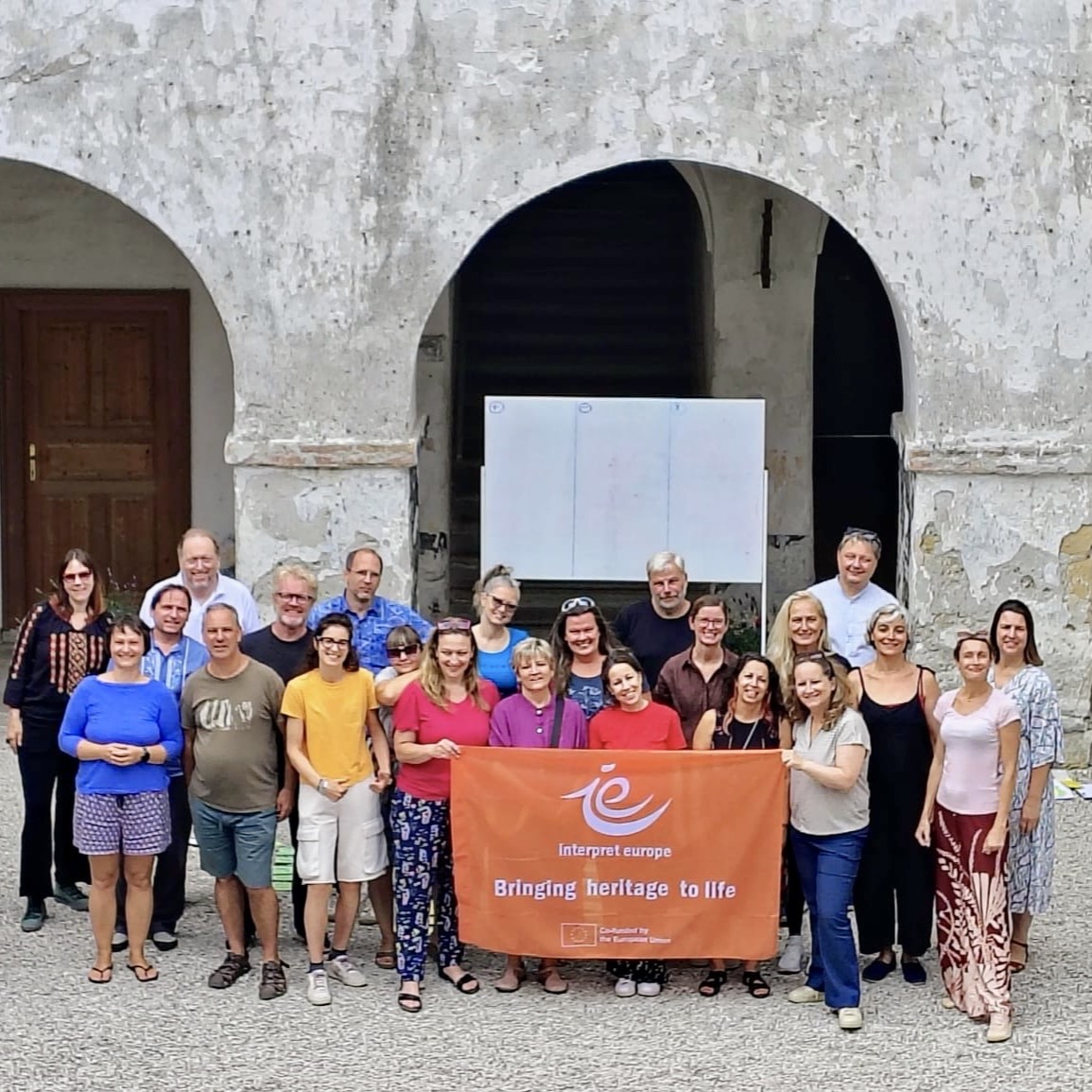
For four unforgettable days, 4-7 July 2026, Mekinje Monastery in Kamnik, Slovenia, was a vibrant hub of learning, communication and inspiration.
The IE Trainers’ Summer School 2026 was the third in a row, confirming it as a cherished tradition of great significance for the IE training community. It is one of the IE events that every Certified Interpretive Trainer (CIT) looks forward to as a chance to do things together, learn, make new friends, reconnect with colleagues, and get inspired.
This year, Javni zavod za kulturo Kamnik opened the doors of the charming Mekinje Monastery to host us. We, as an international team of 24 trainers, together with the IE management representatives, gathered there to grow through exchange.
What made this summer school truly exceptional was its innovative participatory concept, making the participants active contributors from the very beginning. Instead of following a programme designed in advance, we created the agenda together, allowing everyone to express their expectations, interests and professional challenges. That way, every voice mattered and helped to shape this learning experience, reflecting the importance of the participatory meaning-making process advocated by heritage interpretation for community building.
The topics chosen were facilitation and mentoring, outreach, training material development, building the training system, and training in the age of AI. Coordinators were named for each topic and they became responsible for managing the groups’ work, plenary discussions, exercises and presentations done by participants, and delivering summaries after the sessions. Bearing in mind the significance of the synergy between management and trainers, participants proposed the steps to take together, which would support all trainers, and the management too, and vice versa. So, it became clear that the event was much more than just a regular professional learning opportunity – it was a transformative step in our joint interpretive journey.
In addition to the event’s co-creation perspective, some trainers gave presentations that were prepared in advance, covering some important topics. Also, a hybrid meeting with trainers who weren’t able to join us in person was organised. During this part, a summary of the coordinators’ meeting held at the IE Conference 2026 in Faro was presented. The participants also discussed the trainer licencing system inspired by a presentation on the proposal to changes to the criteria.
The summer school was attended by some new trainers who attended the subsequent three-day upgrade course for certification, so they got an early insight into the IE training system and community spirit.
Beyond the sessions in the monastery, participants enjoyed a visit to the impressive Velika planina and a guided tour through the picturesque town of Kamnik.
The summer school, of course, had to come to an end, but its impact is only beginning. We returned to our homes carrying much more than knowledge and skills. We carry a renewed passion and power of togetherness, fresh perspectives, and the confidence to inspire others across Europe where we act as trainers, with a deeper understanding that every community has voices worth hearing. This event confirmed that the summer school is an experience that keeps the IE trainers coming back year after year. Stay tuned for the next chapter.
Bojana Sekulić is an IE Certified Interpretive Guide (CIG) and trainer (CIT), as well as a certified hiking and tour guide in Montenegro. She is passionate about heritage protection and local community empowerment, so she creates and delivers meaningful experiences for travellers. Bojana believes heritage interpretation enables responsible tourism to become a powerful force towards sustainability. She can be contacted at: bojana.sekulic.bs@gmail.com.
To cite this article: Sekulić, Bojana (2026) “Trainers’ Summer School – Where exchange leads to change”, Interpret Europe Newsletter Summer 2026, pp. 15–16. Available online: Interpret Europe Newsletter Summer 2026.