Heritage, climate, cultural diversity, conflict, cooperation, mutual understanding. Is there a sustainable future without heritage?
Culture is important; without heritage, there is no future. It seems we are all aware of this, but are we really?
It is always worth repeating this, speaking out loud, so that everyone who cares deeply about memory and heritage does not cease in their efforts and feels that their work is not in vain.
If we think of European tradition, of Western civilisation from its very beginnings, it is hard to find a better place than Cyprus, a country where trade routes and paths of cultural exchange have crossed for centuries. It was the Mediterranean region that gave rise to socio-cultural and economic transformations across Europe, North Africa and the Middle East, and from our ancestors in this area we can learn how to foster the peaceful coexistence of civilisation and nature.
What heritage experts are currently focusing on is its significant role in the daily lives of local communities, its impact on environmental protection, and its importance for resilience to crises. It was these issues that formed the leitmotif of the meeting at the European Cultural Heritage Summit, which I attended in Nicosia, Cyprus, from 26-30 May.
In the discussions and speeches that took place during those few days, several points were consistently emphasised: without heritage, there is no future; it is on this foundation that a shared, peaceful future can be built, even when there is a degree of hostility between nations.
It was noted many times how vital the local community is to the preservation of heritage, including natural heritage. Informed residents recognise that the past surrounding them is an undeniable asset, without which the creation of a sustainable future is impossible and pointless. The fundamental conclusion: that education, cooperation, and learning about the heritage that surrounds us is vital to our shared future, as well as subsequent proper and comprehensive interpretation of our heritage, combined with an interesting, engaging narrative.
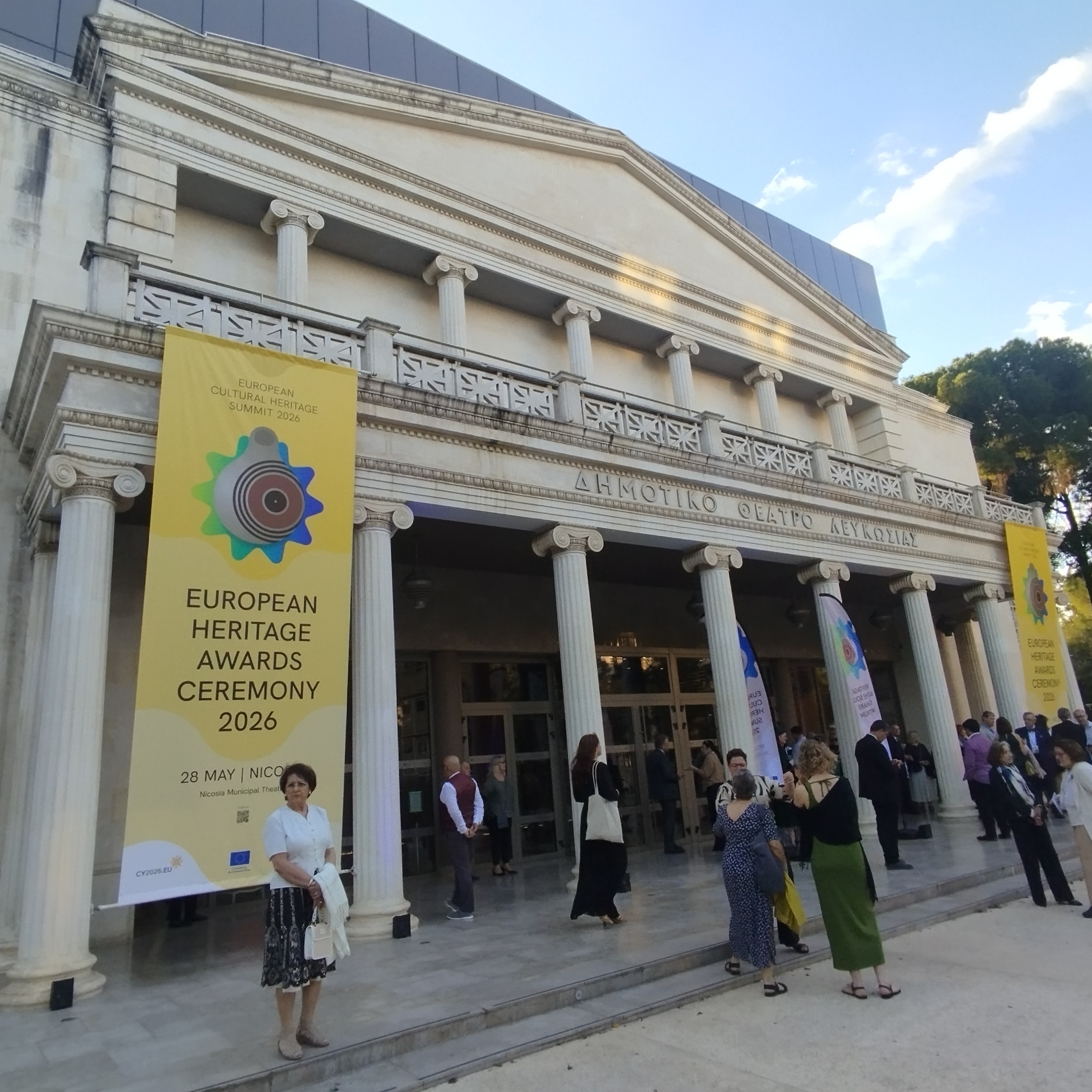
The five-day meeting in Nicosia featured events that are a regular feature of every Europa Nostra General Assembly: Excellence Day, during which representatives of the award-winning projects presented their work; and the following day’s European Heritage Award Ceremony, at which we celebrated outstanding achievements in the field of heritage conservation and promotion.
During the European Heritage Policy Agora and the European Heritage Hub Forum, discussions focused on how cultural heritage influences sustainable development and how it can help overcome crises and conflicts. The proceedings concluded with a visit to the Turkish side of Europe’s only divided capital, where we discussed cross-border cooperation and overcoming various barriers, using Nicosia as an example.
The Summit is supported by the European Union and was this year held under the patronage of the Cyprus Presidency of the Council of the EU.
Ewa Wojtoń is a historian working as a specialist in the Research Institute of European Heritage in the International Cultural Centre in Kraków, Poland (www.mck.krakow.pl). You can get in touch with her at: e.wojton@mck.krakow.pl.
To cite this article: IE News Team (2026) “‘Heritage as the Soul of Mare Nostrum’ – The European Cultural Heritage Summit, May 2026”, Interpret Europe Newsletter Summer 2026, p. 30. Available online: Interpret Europe Newsletter Summer 2026.