As the year ends, it’s time for an update on our European projects. Here we discuss HI-People.
HI-People is our largest project, supported by the European Union Creative Europe programme. The programme invests in network organisations like IE that it believes can help transform the cultural and creative sectors in Europe.
That transformation relates to our ongoing efforts to foster value-based and people-centred heritage interpretation through training, networking, advocacy and policy. This centres on a common understanding, or framework of reference (FoR), among European heritage stakeholders of what we mean by the term value-based and people-centred heritage interpretation, its principles and ethical guidelines, so that the approach is used and referenced consistently in the heritage sector.
Work is underway and, in the coming weeks, you’ll find an introduction on the IE website to value-based and people-centred heritage interpretation, a starting proposal for the Framework of Reference and a forum for research and exchange on the subject. The exchange will evolve over the next few years, expanding from an advisory group of European heritage sector experts to wider consultation with IE members and beyond.
But to make a real change, the FoR must connect to ‘bigger conversations’ in Europe on democracy, community building, and sustainable development where it can translate the value of heritage and a practical people-centred approach to achieve the above visions via, for example, the Faro Convention. By anchoring IE’s work in the Faro Convention, the FoR can be a model of ‘how to do it’ and reclaim our essential role in this vital European movement while moving closer to the centre of the conversation.
The Learning Landscapes initiative is also an important part of this ‘bigger picture’. In addition to extra outreach support provided to the LLI team by the HI-People project – to recruit more participating territories for a new cycle of LLI, it will also help revise the interpretive agent course materials from the first phase and ultimately provide new opportunities for our community of certified trainers as the initiative expands.
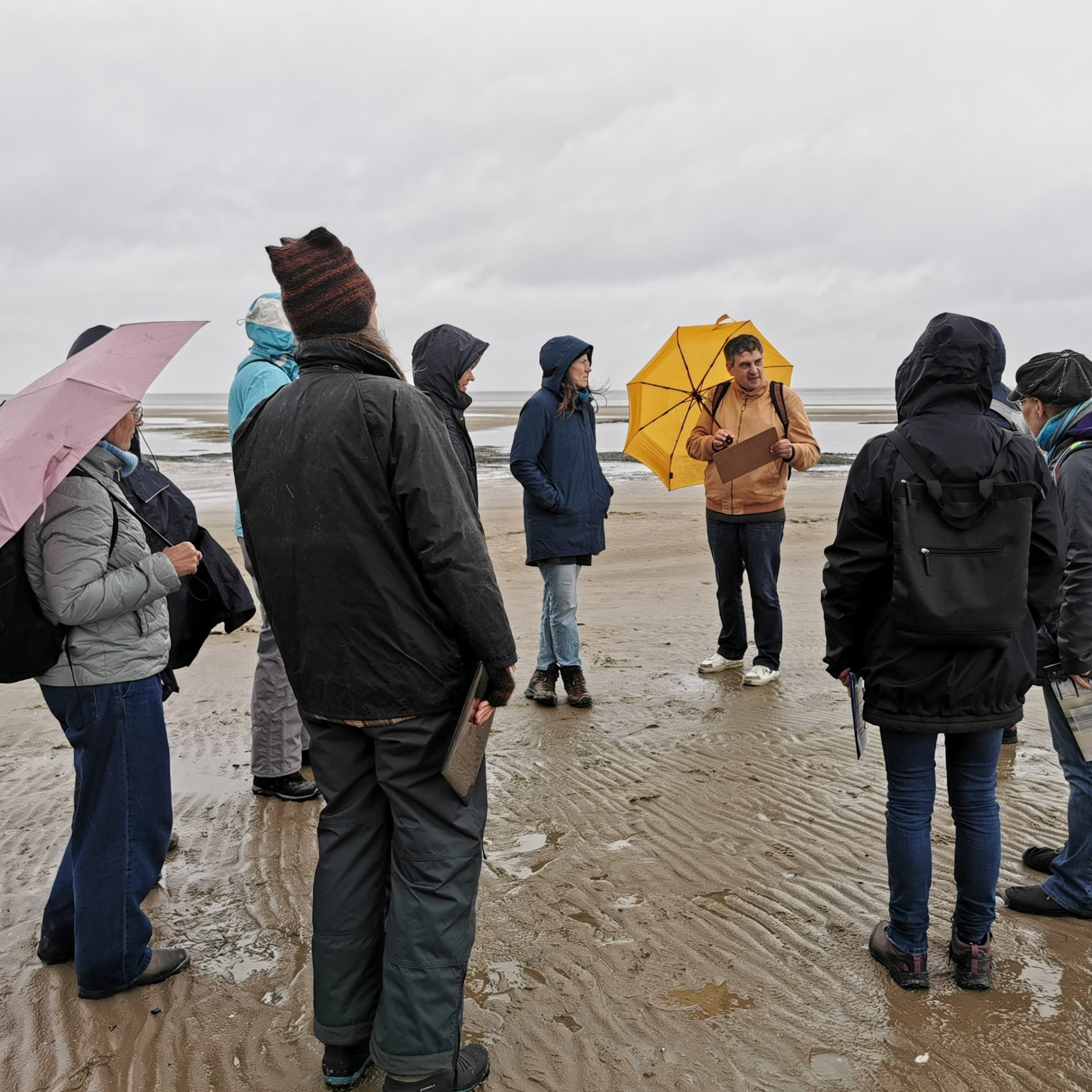
Continuing with training, IE held a trainers’ summer school in Vrsar, Croatia, in June, while a new Certified Interpretive Trainers course started online in November with in-person training in Frankfurt next February. We look forward to welcoming a new generation of IE trainers very soon!
A new IE mentoring programme has also been launched to help freelance consultants (IE members or non-members) to grow their businesses, develop their entrepreneurial skills and make long-term careers as interpreters. This has begun with a needs analysis survey (see link above) followed by a multi-annual online programme beginning in early spring 2026.
Such attention to capacity building is vital if we are to ensure that our efforts to advocate for the value of heritage and the profession of heritage interpreters are backed up with a body of highly competent professional consultants and/or trainers ready to translate such claims and ambitions into tangible actions on the ground.
Outreach to promote the value of heritage and the contribution of heritage interpretation to wider society also hinges on our network of Country Coordinators who will be supported to hold national and regional networking events over the next three years. The aim is to connect heritage professionals with IE’s approach to interpretation as well as its capacity building and professional offer provided by ‘local’ members and trainers. One major such event has already taken place in Croatia this year and others will follow. In the meantime, IE’s Country Coordinators continue to meet regularly online to discuss their roles and the contribution they can make in their different contexts.
HI-People is also about addressing new realities, such as the growth of digital technology and how this can be best employed and scrutinised to support value-based and people-centred heritage interpretation. Preparations are now underway to produce and test a new two-day digital heritage interpretation module, together with an analysis of best practice and a set of ethical guidelines. Plans are also being made to deliver a toolkit on the sustainability credentials to support the value of HI, to be produced in 2026.
Finally, work has begun since the autumn to refresh the IE website for quicker navigation with more structured content for IE members, potential members, peer organisations and IE trainers. A survey will be published in early January to gather your opinions and experience on user needs, functions and features. The revised website should be online next summer.
Perhaps you’ve noticed the new IE promotion campaign Share your story, find your meaning on IE social media? This is part of our new thematic communication strategy supported by HI-People. The campaign theme this winter has been ‘participation’. Watch out for more posts on this subject and IE’s work! The strategy also sets out other media, such as podcasts and video clips, to raise awareness about the evolution of heritage interpretation and our work to train interpreters – all useful tools that can help us all explain and promote our work.
Alexander (Sandy) Colvine is IE’s Project Manager for HI-People and Empaths. He can be contacted at: alexander.colvine@interpret-europe.net.
To cite this article: Colvine, Alexander (Sandy) (2025) ‘European projects update: HI-People’ in Interpret Europe Newsletter 4‑2025, p. 6-7.
Available online: Newsletter winter 2025