An innovative, human-centered interpretive project using living history to engage communities interactively and personally with Croatian heritage.
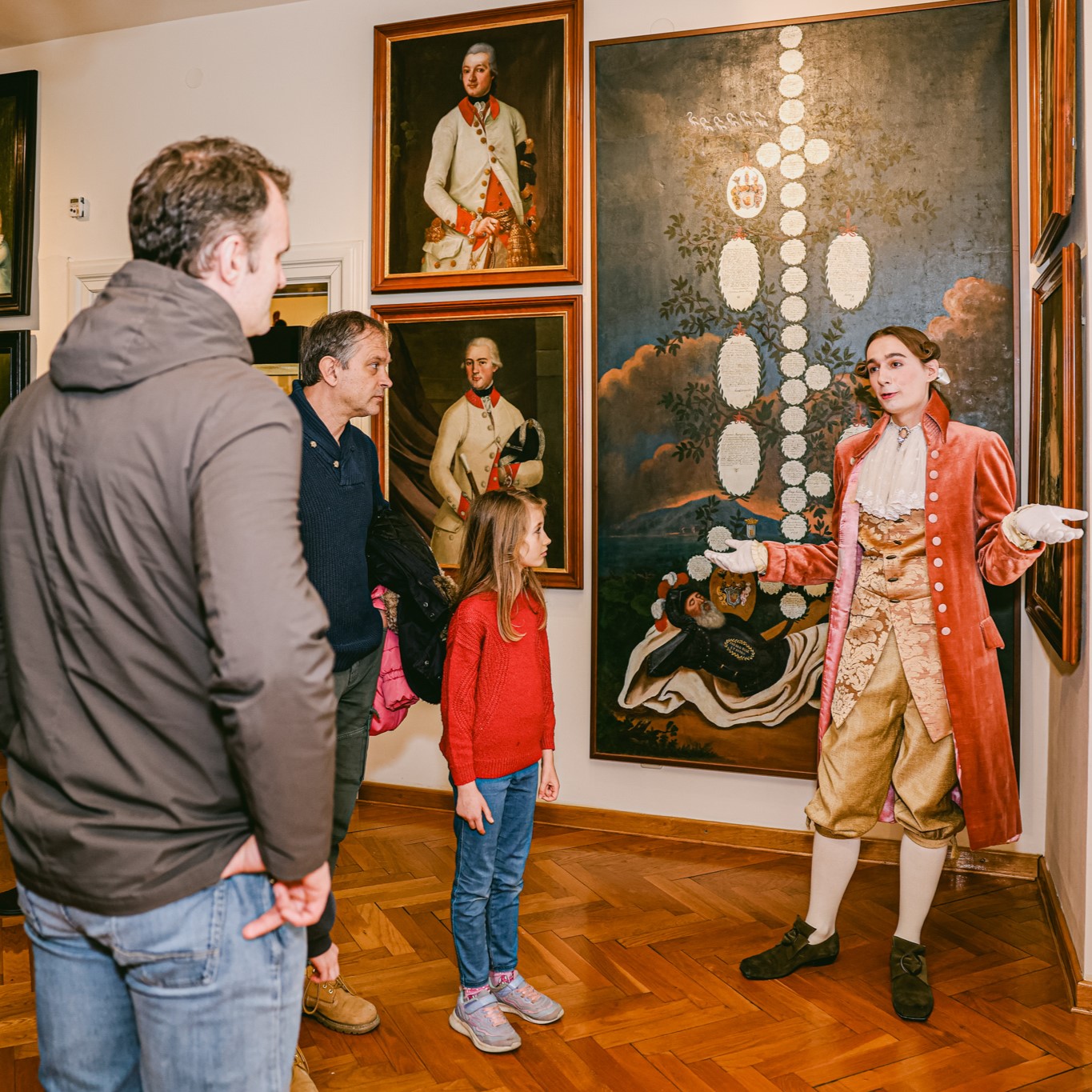
The Living Images project at the Zagreb City Museum represents an innovative museological interpretation model based on the method of living history, which was the first of its kind in Croatia. Launched in 2000, this programme was designed as a platform for interactive and personally narrated presentations of history through the roles of curators, who assume the personas of historical figures closest to their interests and expertise. Over the years, the project has developed and attracted external participants, including colleagues from other museums, public institutions, friends, and family members. Individuals could choose characters and roles from history or everyday life, allowing visitors to gain a deeper, more personal experience of history. It is much easier to remember a personal conversation with the Black Queen – Barbara Celjska or Ban Jelačić than a traditional guided tour with standard data and facts.
The advantage of the Living Images approach is that interpretation is human-centered, emphasising the human dimension of history, daily life, customs, misconceptions, triumphs, and struggles of the characters that curators and collaborators interpret. This approach engages visitors on both an emotional and intellectual level. Living Images is the first official example at the Zagreb City Museum of applying living history methods in interpretation, thereby encouraging new approaches in museum presentation and interpretation.
Living Images mainly encourages participatory and experiential methods in museums, emphasising authenticity and context. Through this project, the local community engages with history personally and directly, turning the Zagreb City Museum into a modern space for connection, reflection, and identity. It also underscores the importance of the human element in interpreting cultural heritage. As a result, this project acts as a bridge between traditional museums and contemporary interpretive methods, offering a meaningful experience that can be expanded or tailored to meet community needs and preferences.
In recent years, the Museum has also begun collaborating with city residents who have expressed interest in cooperation, making Living Images a bridge between experts and laypeople. This provides additional opportunities for residents to participate in education and the interpretation of history. On its 25th anniversary, Living Images remains faithful to its tradition but is also open to change and breaking down walls between worlds.
Due to the popularity, tradition, and high professional standards, the Zagreb City Museum has protected ‘Living Images’ under the Copyright Law. This in itself stands as a sign of a good interpretive programme.
Aleksandra Berberih Slana is a museum director, cultural historian and museologist with extensive experience in museum interpretation and educational programmes, specialising in innovative methods of engaging the public with cultural heritage. Aleksandra can be contacted at: abslana@mgz.hr.
To cite this article: Berberih Slana, Aleksandra (2025) ‘Living Images: A Creative Tool for Interpreters of History’ in Interpret Europe Newsletter 4‑2025, p. 21–22.
Available online: Newsletter winter 2025