16 trainers from ten countries enjoyed a high-level CIT week in Frankfurt, linking values, practice and participation in a new blended format.
Three years after the last IE Certified Interpretive Trainer (CIT) course, 16 participants from ten European countries gathered in Frankfurt am Main for an intensive week of learning – to join the ranks of the IE training team. Having met online for six preparatory sessions since October, they arrived well prepared and eager to delve into heritage interpretation.
For the first time, the CIT was delivered in a new blended format combining online sessions, lectures, study visits, and participants’ own presentations and assessed training sessions. This structure created a continuous learning journey and ensured an exceptionally high academic and practical level throughout the course.
From day one, the atmosphere was vibrant. Different professional and cultural backgrounds quickly revealed shared challenges. Whether discussing cultural or natural heritage, the group repeatedly returned to key concepts such as experience, resonance, stewardship and participation, as well as the central role of values. With guidance from experienced safeguarding trainers, open questions and new encounters continuously reshaped participants’ understanding of, and approach to, interpretation.
Daily study visits connected theory with practice. A particular highlight was the visit to the Deutsches Romantik-Museum, which is the first museum to be dedicated entirely to the Romantic era. A curator provided valuable insights into the museum’s inner workings, sparking enriching discussions about storytelling and the philosophical roots of interpretation. At the Goethe House in Frankfurt, participants climbed the same stairs once used by Johann Wolfgang von Goethe, reflecting on the interplay of biography, place, and literature in creating meaningful visitor experiences.
At the Historisches Museum Frankfurt, participants had the opportunity to engage in conversation with the curator of the permanent exhibition, exploring how interpretation can translate into active participation in exhibition design. Reflection on legacy and responsibility towards future audiences was sparked by the long-term ‘Library of Generations’ project, which runs until 2105.
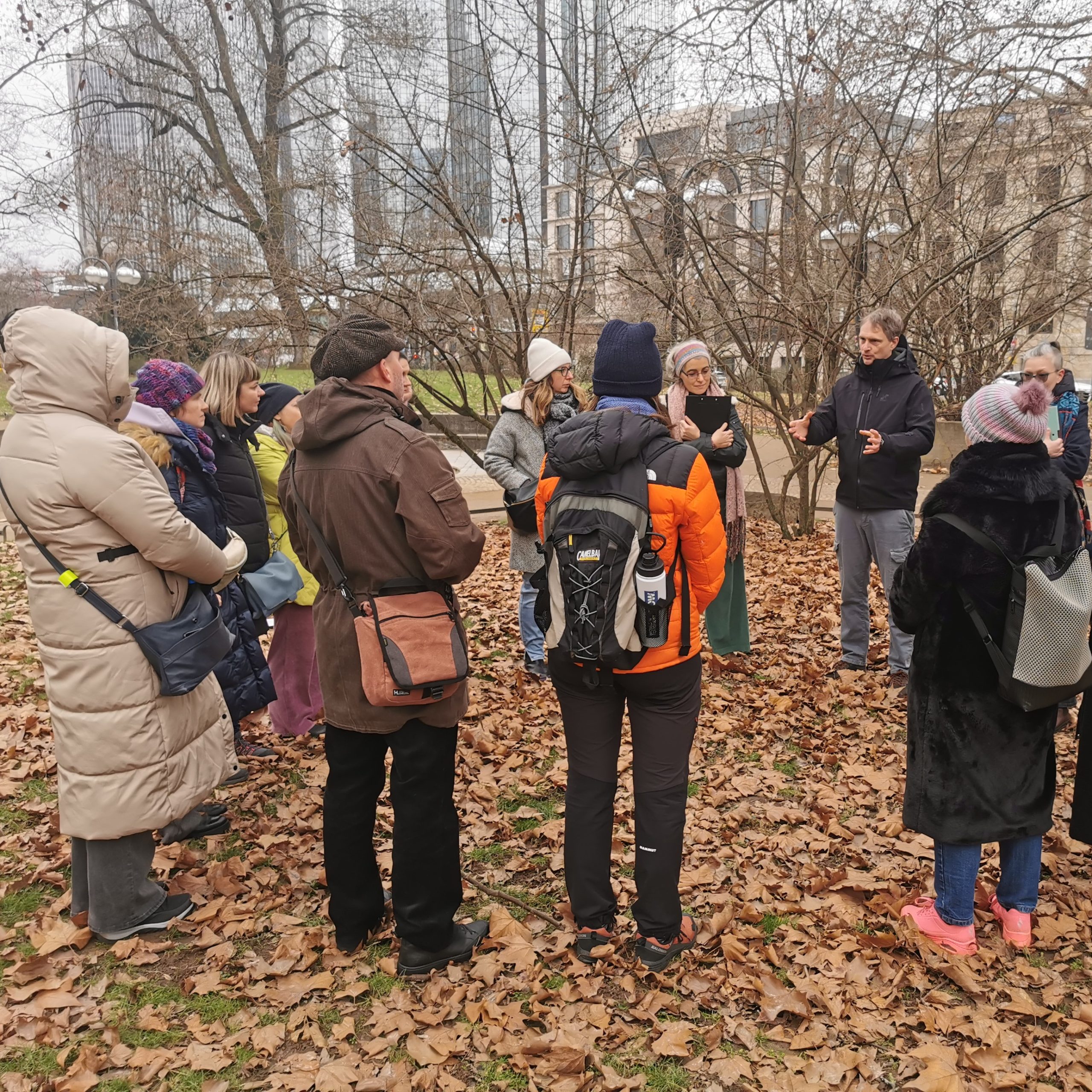
Day four was largely dedicated to practical work. Participants conducted their assessed sessions along the river and through Frankfurt’s reconstructed old town, exploring participatory approaches and co-creation. At the Museum Judengasse, the focus turned to addressing sensitive heritage, followed by a reflective visit to the Old Jewish Cemetery. The theme of sustainability remained an essential thread throughout the week.
On the final day, participants visited the Struwwelpeter Museum and the Kaiserpfalz Franconofurd, before concluding the course with candlelit singing. Participants returned home to finalise their assignments and prepare for trainer upgrades, ready to deliver future IE certification courses across Europe.
Cornelia Lütcke is a tourism expert who also works as a freelance tourist and nature guide in Mecklenburg-Western Pomerania, Germany. You can contact her at: cluetcke@gmx.de.
To cite this article: Lütcke, Cornelia (2026) “CIT Frankfurt: Raising the bar together”, Interpret Europe Newsletter Spring 2026, p. 14.
Available online: Interpret Europe Newsletter Spring 2026.