Making connections via the often-overlooked cities of Gračac and Obrovac in search of lasting inspiration and deeper meaning.
It’s hard to believe it’s been three months (at time of writing) since the Interpret Europe Certified Interpretive Guide (CIG) course that I attended.
Nestled between the start of winter holidays and the last bits of autumn, we gathered in the unlikely yet ideal setting of Gračac. Thanks to the Zadar Region Tourist Board, the Cerovac Caves Centre of Excellence was our home for the next few days. We gathered from all over Croatia to learn, discuss, and dive into a new experience.
Our trainer encouraged us to search for phenomena inspired by our rugged surroundings. Getting out in the cold was a welcome opportunity for us to seek meaning, try out stepping stones, and apply what we had learned so far in the warmth of the inside space.
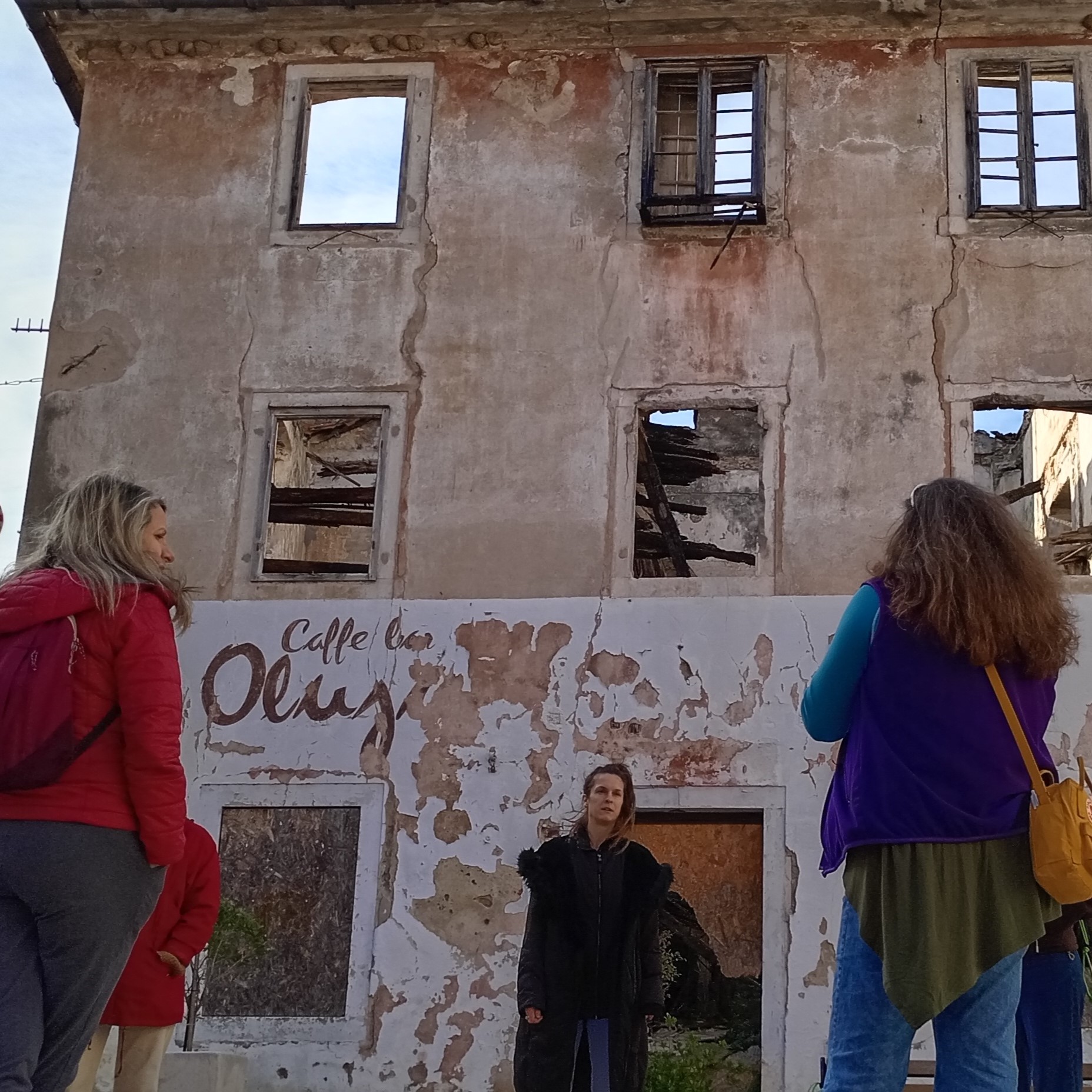
After spending two days soaking in all things interpretation, it was time to test out our skills in the once-thriving city of Obrovac at the other side of Mount Velebit. Fortunately, our group was blessed with an enthusiastic tour guide-to-be of just the area, who gave us a brief guided tour through the small town that has seen better days. It was surprisingly exciting to explore its riverbanks and hidden corners, discovering layers of history and centuries of life that formed the identity of its people. With so much inspiration it was easy to create our own interpretive walk connecting places of encounter in the seemingly empty city. The sights we chose spoke to us past what the eye could see. I don’t remember everything that was said, but I remember the emotions we felt and shared in our communal space. Isn’t that what interpretation is all about?
Connecting with our surroundings on a deeper level happened quite literally on the second weekend of our brief but impactful gathering. We were invited to explore the lower part of the Cerovac caves. The underworld thrilled us and made us feel like a part of a larger ecosystem, both socially and historically. Seeing the formations created over thousands of years really puts things in a different perspective. Working again with the rough surface of the northern slopes of Mount Velebit made so much more sense after touching its dark underground heart. Even the cold seemed a bit softer and became one of our phenomena.
A sunny Sunday marked the end of our time together. Climbing the old fortress of Obrovac and marvelling at the Zrmanja river canyon made us fall in love with the region all over again. It was especially emotional to search for meaning in this area, which suffered greatly in the Croatian Homeland War of the 1990s. Making new connections through our shared values seemed more meaningful than ever.
To say our goodbyes with more ease, we shared a rich meal together in a rustic local restaurant. The memory of our time together, the knowledge we gained, and the connection we experienced will be ground for all our future interpretations.
Maša Pavičić is a tour guide and writer, mostly focused on culture and travel. She also does communication for the Dalmatian Islands Environment Foundation. Maša can be contacted via her website, Cultourist: www.cul-tourist.com.
To cite this article: Pavičić, Maša (2026) “Finding inspiration in unlikely places”, Interpret Europe Newsletter Spring 2026, p. 16.
Available online: Interpret Europe Newsletter Spring 2026.