Exploring through a soundwalk, which integrates multiple stories and engages with its palimpsest nature and difficult heritage.
[Submitted in response to the Learning Landscape initiative online symposium]
History
The Plaszow German Nazi concentration camp (KL Plaszow) was established in two districts of Kraków – Podgórze and Wola Duchacka – on the grounds of two pre-war Jewish cemeteries.
The camp operated between 1942 and 1945 on an area of approximately 0.8 sqkm (today, only half of that terrain is officially recognised as a memorial site). Depending on the period, it functioned as a forced labour camp, a concentration camp, and a transit camp.
Imprisoned there were Polish Jews (including those deported from the liquidated Kraków Ghetto), Poles, Hungarian and Slovak Jews, Romani families, and Germans. The total number of prisoners is estimated at over 35,000 people, with approximately 6,000–10,000 victims.
Commemoration and controversies
Commemoration efforts date back to the communist era. Between 1947 and 2002, seven monuments and plaques were erected, the most recognisable being the Monument of the Victims of Fascism (1964). The site gained broader public visibility in the 1990s, particularly after the premiere of the Oscar-winning Schindler’s List, directed by Steven Spielberg.
In 2002, the site was entered into the official heritage register as a war cemetery. In 2006, a competition for a memorial was announced; although a winning design was selected the following year, it was significantly modified in 2013 after a series of controversies. One major concern was its incompatibility with Halacha (Jewish religious law), which prohibits the disturbance of human remains.
In 2016, the Kraków Museum initiated activities to raise public awareness of the site, including a conference, guided walks, and the beginning of conceptual work on a new commemoration scenario. Archaeological research was conducted on-site between 2016 and 2019. In 2017, an outdoor exhibition was installed.
Between 2016 and 2020, extensive public consultations took place. The proposed commemoration plan sparked further controversy, as it included fencing the area and the large-scale removal of trees to construct a museum building (ongoing). In 2020, the KL Plaszow Museum was officially established.
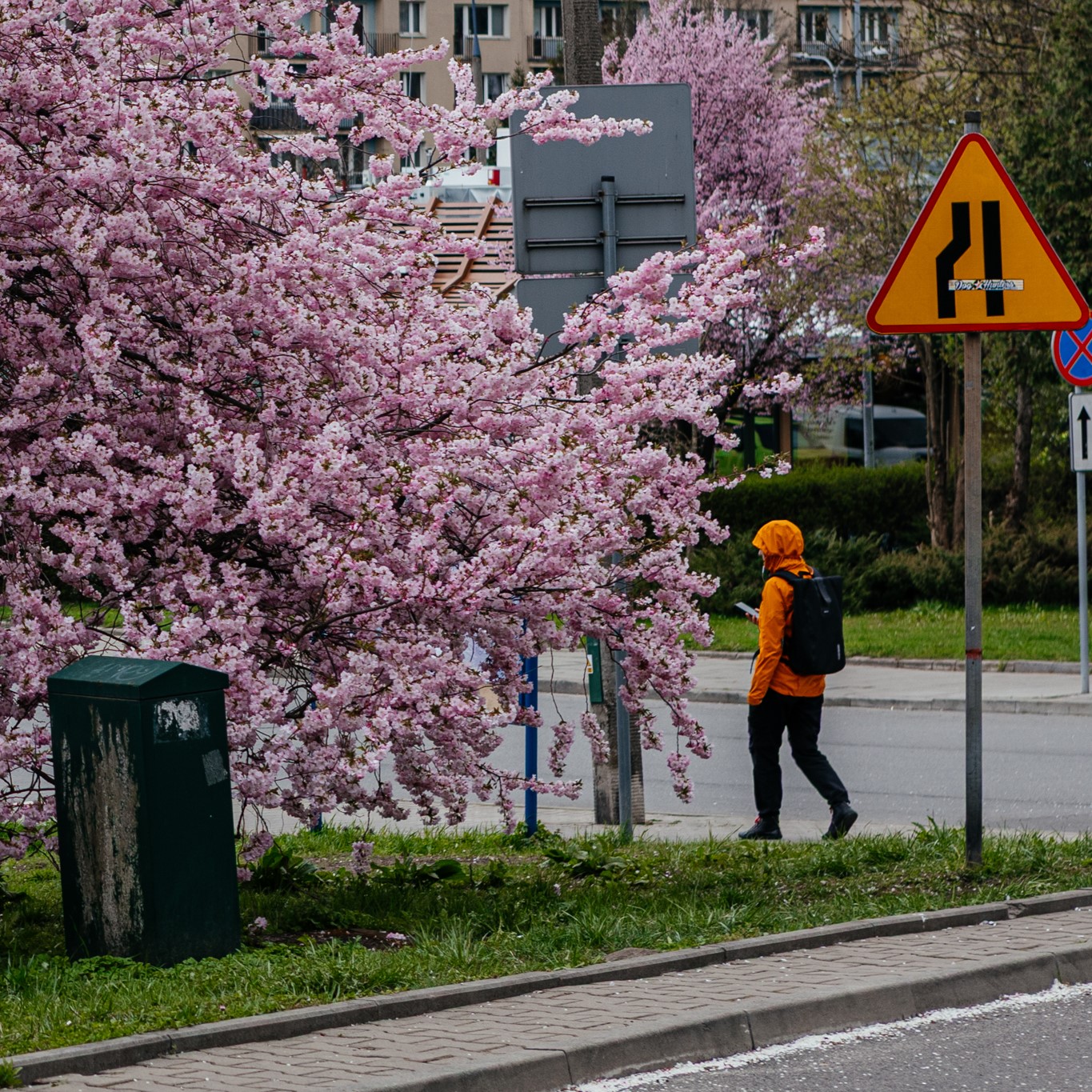
By that time, due to urban development and changes in the surrounding landscape, the former camp site had become a vast green area near the city centre, approximately 20 minutes from the Main Square. Residents used it for a range of everyday activities that were not always aligned with the site’s traumatic history: walking with children and dogs, picnicking, sunbathing, jogging, and social gatherings.
In 2017, shortly after its founding, FestivALT began working with and on the site. It aimed to mediate tensions surrounding the commemorative process and to propose participatory projects that would engage the local community, deepen knowledge of the area’s Jewish history, and acknowledge the site’s palimpsestic character.
Among these initiatives was a series of walks titled The Jew, the Dog, and the Neighbour, designed to familiarise participants with the locations of mass graves and to indicate which areas (then still unmarked) should not be disturbed. The walks were led by a Halacha expert, accompanied by his dog, creating a symbolic and practical gesture of coexistence and care. Other projects included Medicinal Plants of Płaszów and a participatory marking of mass graves with Berlin-based artist Anna Schapiro. Using ecological, earth-based pigments safe for the environment, animals, and people, participants created temporary visual markers, gradually fading with rain and snow – both a practical intervention and a metaphor for the fragility and disappearance of memory. Simultaneously, the Still Standing – Monument in Motion project introduced a performative monument presented on the site yearly.
Soundwalk ‘In This Place’
In 2024, FestivALT received funding from the Jewish Historical Institute Association and the National Recovery Plan (KPO), enabling collaboration with Polish artists Marcin Dymiter and Ludomir Franczak, who had previously worked with the audiosphere of the former KL Stutthof site (now Stutthof Museum) in northern Poland.
The project draws on nearly 100 interviews conducted by the FestivALT team throughout the years with diverse stakeholders, as well as excerpts from essays and books, and ambient compositions created by Dymiter specifically for the soundwalk.
It integrated multiple perspectives: human (residents, researchers, guides, descendants, decision-makers) and non-human (elements of the soundscape reflecting the agency of nature and other-than-human actors).
The freely accessible mobile application Echoes.xyz (also available via desktop) was used to implement the project. The platform operates through geolocation: each sound piece is assigned to a specific location and appears on the map as a geometric shape, accompanied by a title and short description. Sounds are activated by the listener’s movement, creating an embodied, multisensory, site-specific experience. The soundwalk can be explored individually or in groups, and allows the site to be encountered within the rhythms of everyday life.
Narrating difficult heritage
The KL Plaszow site embodies both difficult history (the stories and traumas of victims and survivors) and difficult heritage (the physical remnants of camp infrastructure embedded in the contemporary landscape). The Echoes app serves here as an accessible technological tool for mediating such difficult heritage and supporting the broader process of heritagisation that, for FestivALT, began in 2017.
Memory activism in this context seeks to foster accessibility, civic dialogue, and ethical engagement with the site. It emphasises community-led, bottom-up practices as a potential counterbalance to institutionalised, top-down narratives.
The KL Plaszow Museum is currently developing its own “Sound Monument,” scheduled to premiere later this year. This project will be accessible exclusively through the museum’s infrastructure, via dedicated headphones available on-site.
Aware of this initiative, FestivALT deliberately structured its soundwalk around two opposite ends of the former camp area – larger than the officially designated memorial zone and encompassing spaces now occupied by, for instance, a gas station, supermarket, and branch of McDonald’s – while leaving the central part untouched. The intention was not to overlap with the Museum’s forthcoming project, but also to preserve the ‘heart’ of the former camp – where the appellplatz once stood, where the mass graves and monuments are located – as an undisturbed space. Visitors can thus experience its present-day audiosphere directly: birdsong interwoven with the distant echoes of urban traffic.
Ultimately, the project seeks to “reveal unheard or silenced stories, challenge perception, encourage emotional and empathetic response, and create a sense of presence.” (Stylianou-Lambert et al, 2022).
Reference: Theopisti Stylianou-Lambert, Alexandra Bounia, and Antigone Heraclidou, ‘Introduction: Emerging Technologies, Museums and Difficult Heritage’, in Emerging Technologies and Museums: Mediating Difficult Heritage, ed. Theopisti Stylianou-Lambert, Alexandra Bounia, and Antigone Heraclidou (New York and Oxford: Berghahn Books, 2022)
Aleksandra Kumala (PhD) is a cultural studies scholar working as a head of research at FestivALT, Poland (www.festivalt.com) and research and documentation officer at ESHEM (https://holocaust-memory-sites.ec.europa.eu/index_en?prefLang=pl). You can get in touch with her at: aleksandra@festivalt.com.
To cite this article: Kumala, Aleksandra (2026) “In This Place: A soundwalk at the former KL Plaszow site”, Interpret Europe Newsletter Spring 2026, p. 21–23.
Available online: Interpret Europe Newsletter Spring 2026.